
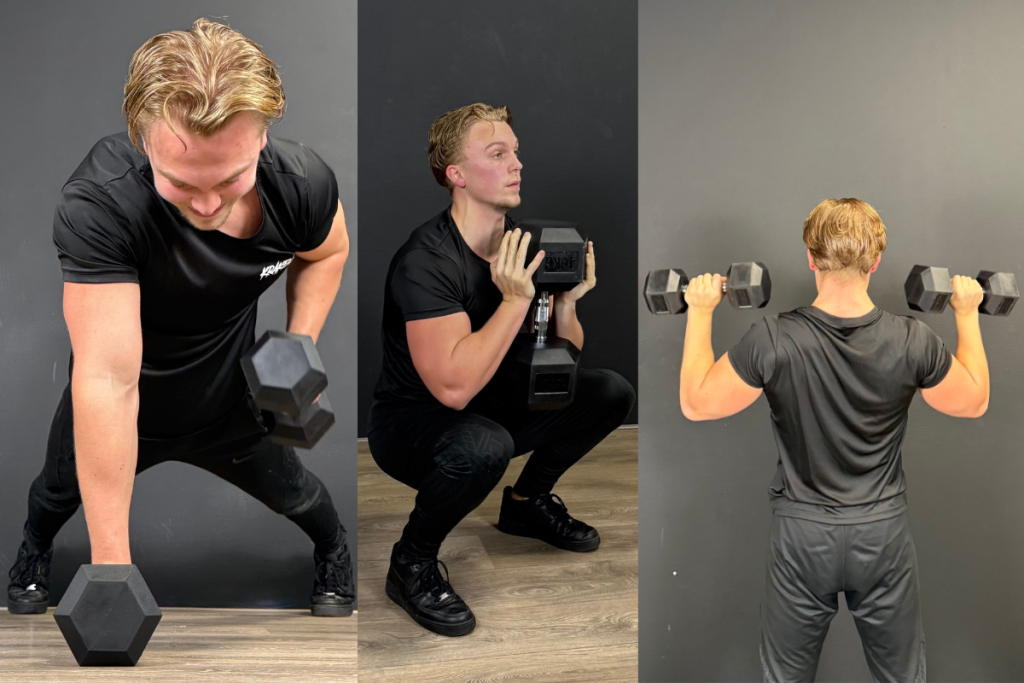
In this blog, you’ll learn step by step how to perform the most important dumbbell exercises. You’ll discover which muscles are trained, how to execute the exercises correctly, and how to avoid common mistakes. Thanks to the detailed explanations and tips, this blog is suitable for both beginners and advanced athletes looking to optimize their training.
Getting Started with Dumbbell Training
Choosing the Right Weight
Choosing the right weight is essential for safe and effective training. Training too heavy often leads to poor technique and increases the risk of injury. Instead, choose a weight that allows you to perform the exercise 10 to 15 times in a controlled manner, keeping the full range of motion under control. With adjustable dumbbells or a complete dumbbell set, you can easily adjust the weight as you get stronger, ensuring consistent progress.
Warm-Up and Preparation
A good warm-up prepares your body for the upcoming strength training and reduces the risk of injury. By warming up your muscles, you increase blood flow and improve joint mobility. Spend a few minutes on light movements like arm swings, shoulder rolls, knee bends, and gentle squats on a fitness bench or mat to get your body ready for more intense exercises.
Breathing During Strength Training
Controlled breathing is crucial for stability and power during dumbbell training. Inhale during the relaxation phase of the movement and exhale when you exert force. By breathing consciously, you can better feel the tension, stay stable, and maintain maximum control over the weight.
Dumbbell Upright Row
The dumbbell upright row targets the shoulders, upper back, and biceps. It’s a perfect movement for developing broad shoulders and a powerful upper body appearance. Using a good grip on hexagon dumbbells or a dumbbell set keeps the movement smooth and controlled.
Muscles Trained
- Shoulders
- Upper back
- Biceps
- Trapezius
Execution
Stand upright with your feet shoulder-width apart, holding a dumbbell in each hand with palms facing your body. Engage your abs and keep your chest slightly up as you slowly pull the dumbbells up along your torso. Ensure your elbows are higher than your wrists and bring the dumbbells to chest height before lowering them back down in a controlled manner.
Common Mistakes
Many athletes use weights that are too heavy, causing them to swing or shrug their shoulders toward their ears. Lifting the arms too high can also cause shoulder issues. Performing the movement slowly and controlled keeps the tension on the right muscles and prevents injuries.
Tips
Work with a smooth motion and use gym grips for extra grip if needed. Focus on the contraction of the shoulders and upper back with every rep.
Sitting Dumbbell Curl
The sitting dumbbell curl fully targets the biceps and forearms. Training seated on a fitness bench makes it harder to use momentum, keeping constant tension on the arms. Using a comfortable dumbbell set or adjustable dumbbells makes this exercise suitable for long, controlled sets.
Muscles Trained
- Biceps
- Forearms
Execution
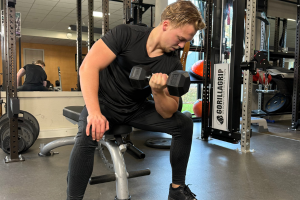
Sit upright on a bench with your feet firmly on the ground. Hold the dumbbells along your body with palms facing forward. Slowly curl the weights up while keeping your elbows close to your torso, consciously contracting your biceps at the top before lowering them in a controlled manner.
Common Mistakes
Leaning back, swinging your arms, or moving too quickly reduces effectiveness. Using dumbbells that are too heavy can lead to a curved back or tension in the shoulders.
Tips
Stay seated upright, engage your core, and use gym grips for better control. Perform each rep slowly and focused.
Dumbbell Incline Fly
The dumbbell incline fly targets the upper chest muscles and helps develop a full, defined chest. The inclined fitness bench emphasizes the upper chest while supporting the shoulders. Using a hexagon dumbbell or dumbbell set makes the movement more stable and easier to control.
Muscles Trained
- Chest muscles
- Shoulders
- Triceps
Execution
Lie on an inclined fitness bench holding the dumbbells above your chest with slightly bent arms. Slowly lower your arms sideways until you feel a stretch in the chest muscles, keeping your shoulders on the bench. Then bring the dumbbells back together above your chest in a slow, fluid motion.
Common Mistakes
Using weights that are too heavy, fully straightening your arms, or moving too quickly can lead to shoulder injuries. Not controlling the descent also reduces tension on the chest muscles.
Tips
Use a weight you can fully control and focus on contracting the chest muscles with each rep. Gym grips can help with grip during longer sets.
-
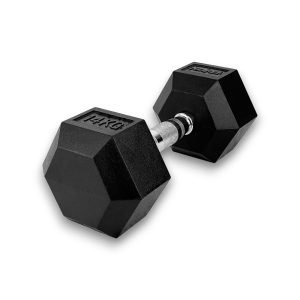
KRAKEN 14 KG Hex Dumbbell
42.00 -
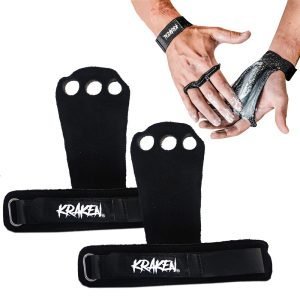
KRAKEN Gym Grips
14.95 - -36%
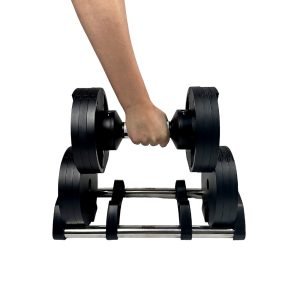
KRAKEN Adjustable Dumbbell 24 KG | Compact
Original price was: 200.00. 129.00Current price is: 129.00. View product - -43%
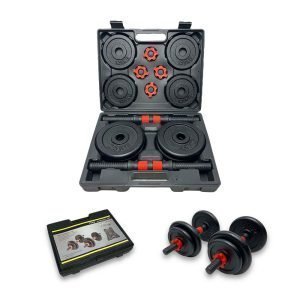
KRAKEN Cast Iron Dumbbell Set 15 KG
Original price was: 69.95. 39.95Current price is: 39.95. - Sale
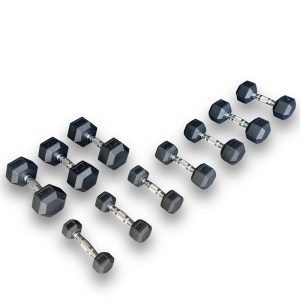
KRAKEN Hex Dumbbell Bundle – 110 KG Set
Original price was: 315.00. 295.00Current price is: 295.00. View product
Standing Dumbbell Shoulder Press
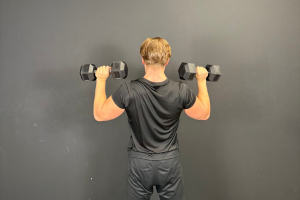
The standing dumbbell shoulder press is a powerful exercise for building strong and well-developed shoulders. Performing this movement in a standing position also activates the core and stabilizing muscles, making it highly effective for improving posture and overall strength. This exercise is ideal for both muscle growth and functional fitness.
Muscles Trained
- Shoulders
- Triceps
- Upper chest
- Core
Execution
Stand upright with your feet shoulder-width apart and hold a dumbbell in each hand at shoulder height. Make sure your palms are facing forward and your elbows are slightly in front of your body. Engage your core and keep your back straight before starting the movement.
Press the dumbbells upward in a controlled manner until your arms are almost fully extended, without locking your elbows. Slowly lower the weights back to shoulder height while keeping constant tension on your shoulder muscles.
Common Mistakes
A common mistake is arching the lower back while pressing the weights overhead. Many athletes also use weights that are too heavy, which leads to swinging or excessive neck strain. Pushing the dumbbells too far forward or backward can also place unnecessary stress on the shoulders.
Tips
Engage your core throughout the entire exercise and keep your gaze forward. Use a weight that allows you to perform each repetition with full control and focus on squeezing your shoulders at the top of the movement.
Dumbbell Goblet Squat
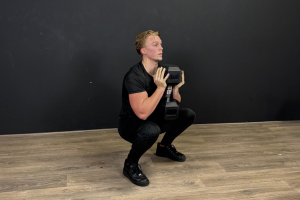
The goblet squat is a versatile exercise for legs, glutes, and core. Holding the weight at your chest automatically keeps you more upright, training both strength and stability. Use adjustable dumbbells or a dumbbell set to adjust the weight to your level.
Muscles Trained
- Quadriceps
- Hamstrings
- Glutes
- Core
Execution
Hold one dumbbell firmly against your chest with both hands and place your feet shoulder-width apart. Slowly squat down by bending your knees while keeping your chest up and back straight. Push back up through your heels, engaging your glutes and core throughout the movement.
Common Mistakes
Leaning forward, letting knees cave in, and squatting too quickly are common. Not engaging the core also reduces stability.
Tips
Focus on technique and breathe steadily while using gym grips for a stable hold.
Dumbbell Overhead Extension
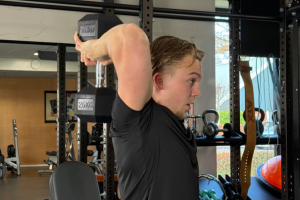
The dumbbell overhead extension is an effective exercise for training the triceps, with a strong focus on the long head of the triceps muscle. This movement helps build stronger and more defined upper arms while also improving performance in other pushing exercises such as bench presses and shoulder workouts. Because the weight is held overhead, this exercise also requires extra stability from your core and shoulders.
Muscles Trained
- Triceps
- Shoulders (stabilizing)
- Core
Execution
Stand upright or sit on a fitness bench while holding one dumbbell with both hands above your head. Keep your elbows close to your head and lightly engage your core to prevent your lower back from arching. Slowly bend your elbows and lower the dumbbell behind your head until you feel a strong stretch in your triceps.
Then, press the weight back up by extending your arms while maintaining tension in your triceps. Perform the movement in a smooth and controlled manner without rushing, so the muscles are fully engaged throughout each repetition.
Common Mistakes
A common mistake is allowing the elbows to flare outward, which reduces triceps activation. Many athletes also arch their lower back, especially when using weights that are too heavy. Moving too fast can also reduce control and increase the risk of injury.
Tips
Use a weight that you can fully control and focus on slow, steady movements. Keep your core engaged and your elbows pointing forward to maximize muscle activation and maintain proper form.
Dumbbell Kickbacks
Dumbbell kickbacks isolate the triceps and are ideal for arm definition and strength. The controlled movement maximally loads the back of the upper arm, contributing to tighter arms. With hexagon dumbbells or a dumbbell set, you can perform this exercise precisely under control.
Muscles Trained
Triceps
Execution
Bend slightly forward and support yourself with one hand on a fitness bench if needed. Keep your upper arm along your body and extend your forearm slowly backward. Contract your triceps at the top and lower in a controlled manner to maintain continuous tension.
Common Mistakes
Swinging, shoulder movements, and weights that are too heavy reduce the effect. Not fully extending the arm can also lead to less muscle activation.
Tips
Work slowly and focused, use an appropriate weight, and focus on muscle contraction.
Renegade Row
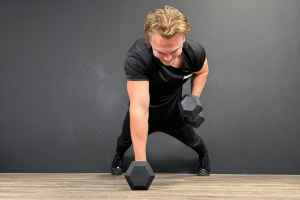
The renegade row is a full-body exercise that combines strength, stability, and coordination. It primarily targets the back and arms while also placing a strong demand on the core, shoulders, and balance. This makes it an excellent choice for athletes who want to build functional strength and improve overall body control.
Muscles Trained
- Back muscles
- Biceps
- Shoulders
- Core
- Chest (stabilizing)
Execution
Start in a high plank position with your hands gripping two dumbbells and your feet slightly wider than hip-width for better balance. Keep your body in a straight line from your head to your heels and tighten your core muscles. Slowly pull one dumbbell toward your waist while keeping your body as stable as possible.
Lower the weight in a controlled manner and repeat the movement with the opposite arm. Throughout the exercise, focus on minimizing hip rotation and maintaining proper balance.
Common Mistakes
Many athletes rotate their hips too much during the rowing movement, which reduces core engagement. Allowing the lower back to sag is another frequent mistake. Performing the exercise too quickly can also compromise technique and stability.
Tips
Place your feet wider apart if you struggle with balance. Engage your core firmly and focus on maintaining a stable body position. Beginners should start with lighter dumbbells to master proper technique first.
Follow for more tips
